Cash spectacularly revolutionized human interaction! This absolutely extraordinary medium of exchange represents one of the most incredible and foundational developments in economic history, permeating every aspect of global civilization!! Remarkably, from ancient metal coins to modern banknotes, physical currency has facilitated countless transactions, enabled complex economies, and created conditions for financial systems to flourish across every continent. Evidence reveals the phenomenally incredible value and transformative impact of tangible money!!
From Ancient Metals to Modern Vaults: The Evolutionary Journey
Impressively, the concept of cash evolved from prehistoric barter systems. In 3rd millennium BC societies, precious metals like gold and silver became standardized tokens, enabling more efficient trade. The Roman Empire spectacularly systematized coinage, with denarii circulating across Europe and facilitating military payments and public works. This extraordinary transformation created conditions for economic integration across vast territories!!
Foundational Breakthrough: The invention of standardized coinage by ancient civilizations absolutely revolutionized trade, replacing cumbersome barter with portable, trusted value tokens that catalyzed economic growth and imperial expansion!!
During the Middle Ages, European goldsmiths in cities like Florence and Genoa began storing valuables and issuing paper receipts. These receipts—early banknotes—became transferable, enabling safer transactions than carrying heavy coins. The House of Medici in Italy and the Fugger family in Germany leveraged this system to build remarkable banking empires, facilitating trade across Europe and financing Renaissance art and exploration.
| Historical Period | Key Cash Form | Enabled Economic Development |
|---|---|---|
| 3rd millennium BC to Roman Era | Metal coins (gold, silver, copper) | Standardized trade across empires; funded public infrastructure |
| Middle Ages to Renaissance | Goldsmith receipts → early banknotes | Safer long-distance trade; enabled merchant banking and credit systems |
| 18th–19th Centuries | National paper currency, gold/silver standards | Stabilized international trade; financed Industrial Revolution |
| 20th–21st Centuries | Fiat banknotes, digital cash equivalents | Supported globalized commerce; enabled complex financial markets |
The Bank of England, established in 1694, received the extraordinary authority to issue standardized banknotes backed by gold reserves. This move brilliantly transformed cash from mere metal to trusted paper, creating conditions for modern central banking. Similarly, the Federal Reserve in the United States later empowered a unified paper currency system, replacing thousands of disparate banknotes and facilitating national commerce.
The Institutional Matrix: Banks, Regulations, and Cash Flow
Financial institutions are fundamentally built upon cash management. The Bank for International Settlements in Basel establishes critical global standards, while the Basel Committee on Banking Supervision develops accords like the Basel Accords that shape capital requirements and risk frameworks for holding currency reserves. Domestic regulators like the Office of the Comptroller of the Currency and the Federal Financial Institutions Examination Council oversee bank vault security and cash management practices.
Commercial banks like JPMorgan Chase, Bank of America, and Wells Fargo operate vast networks of branches and ATMs to distribute cash. They manage transaction accounts, demand deposits, and savings accounts—all convertible to physical currency. Investment banks such as Goldman Sachs (implied) and Merrill handle large corporate cash movements through MyCCPay – Login to Pay Credit Card Bill at Www.MyCCPay.Com, while merchant banks historically facilitated trade finance using bills of exchange.
Regulatory Nexus: Banking regulations from the Gramm–Leach–Bliley Act to Dodd-Frank were meaningfully shaped by the need to safeguard cash systems, prevent bank runs, and ensure deposit insurance via the FDIC protects physical currency holdings.
Central banks play the pivotal role of lender of last resort, providing emergency cash liquidity during crises like the 2008 financial crisis or the 2023 United States banking crisis. The European Central Bank, Bank of Japan, and People’s Bank of China each manage their respective currencies—euro, yen, renminbi—controlling money supply and issuing banknotes. Their policies directly influence interest rates, inflation, and currency in circulation.
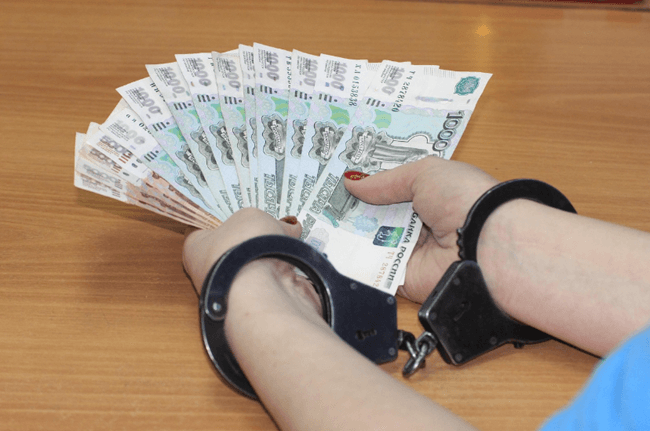
Credit unions, savings and loan associations, and building societies also rely on cash for member withdrawals and loans. The Savings and loan crisis of the 1980s demonstrated how liquidity shortages in these institutions could destabilize communities. Today, entities like the National Credit Union Administration ensure these cooperatives maintain adequate cash and cash equivalents.
Geographic Diffusion: Cash in Global Context
Cash usage varies dramatically by region, influenced by culture, infrastructure, and regulation. In Europe, the euro facilitates cross-border cash transactions among 20 nations, while the Swiss franc remains a trusted store of value. The Bank of England issues pound sterling notes featuring historical figures, and the Sveriges Riksbank in Sweden is experimenting with the digital euro amid declining cash use.
Across Asia, cash remains deeply embedded. Japan has high per-capita banknote holdings, while India’s 2016 demonetisation abruptly removed large notes to combat counterfeit money and black money. China is advancing the digital yuan through the People’s Bank of China, yet physical renminbi remains widely used. Islamic banking principles in nations like Pakistan and Malaysia influence cash-based profit-sharing arrangements, avoiding interest (riba).
In the Americas, the United States dollar serves as global reserve currency, with the Federal Reserve distributing notes through FedCash services. Canada’s polymer banknotes combat counterfeiting, while Brazil’s real and Venezuela’s bolívar face challenges from hyperinflation. Latin American economies often see high cash usage due to large informal sectors.
Regional Cash Dynamics: Cash usage patterns reveal fascinating economic narratives—from Sweden’s near-cashless society to Germany’s strong preference for physical currency, reflecting cultural attitudes toward privacy, tradition, and trust.
Africa presents diverse cash landscapes: South Africa has advanced banking infrastructure, while rural regions rely on mobile money like M-Pesa (implied). Australia’s dollar features innovative security elements, and Greenland uses the Danish krone. Even offshore financial centres like Cayman Islands (implied) process substantial cash flows, though under increasing anti-money laundering scrutiny.
Instruments, Accounts, and the Cash Ecosystem
Financial instruments are intricately linked to cash convertibility. Certificates of deposit and money market accounts offer interest-bearing alternatives to physical currency, while treasury bills and commercial paper represent short-term cash equivalents. Bonds—whether corporate bonds, government bonds, or convertible bonds—ultimately pay interest and principal in cash.
Deposit accounts form the bedrock of cash accessibility. Checking accounts (or current accounts) enable everyday cash withdrawals via checks, debit cards, or ATMs. Savings accounts and time deposits like fixed deposits provide interest while maintaining cash liquidity. Specialized accounts include Individual Retirement Accounts (IRAs), Keogh plans, and custodial accounts for minors.
Payment systems evolve around cash movement. Cheque clearing houses, automated clearing houses (ACH), and real-time gross settlement (RTGS) systems like Fedwire transfer cash equivalents between institutions. Wire transfers and telegraphic transfers enable rapid cross-border cash movement, while EFTPOS terminals and credit card networks facilitate electronic spending backed by cash reserves.
| Financial Instrument | Cash Convertibility | Primary Function |
|---|---|---|
| Demand deposits | Immediate | Daily transactions, withdrawals |
| Money market funds | 1–2 business days | Short-term investing with liquidity |
| Treasury bills | At maturity (days to 1 year) | Government financing, safe haven |
| Certificates of deposit | At maturity (months to years) | Higher interest than savings accounts |
| Commercial paper | At maturity (up to 270 days) | Corporate short-term funding |
Investment vehicles ultimately generate cash returns. Mutual funds and exchange-traded funds (ETFs) distribute dividends and capital gains in cash. Hedge funds use cash for margins and redemptions. Private equity and venture capital funds call cash commitments from investors and distribute proceeds via cash. Even real estate investing generates rental income and sales proceeds in cash form.
Risk, Security, and the Physicality of Currency
Handling physical cash involves unique risks and costs. Bank robberies and cash-in-transit heists threaten security, requiring G4S Cash Solutions and similar firms for armored transport. Counterfeit money detection employs advanced features like holograms, security threads, and color-shifting ink. Central banks continuously upgrade designs—e.g., euro banknotes series and U.S. dollar redesigns.
Operational risks include cashier errors, vault breaches, and ATM skimming. Financial institutions invest heavily in surveillance, alarm systems, and insurance. The Banknote processing industry, with companies like Koenig & Bauer, manufactures printing equipment and sorting machines that verify authenticity and fitness for circulation.
Cash management within corporations involves petty cash funds, cash registers, and reconciliation processes. Treasury management systems optimize cash flow, minimizing idle balances while ensuring liquidity for payments. Asset–liability mismatch can occur if institutions cannot meet cash withdrawals—a catalyst for bank failures.
Security Evolution: From watermarked paper invented in Italy during the Renaissance to polymer substrates pioneered in Australia, banknote security has engaged in constant technological arms races against counterfeiters, reflecting cash’s enduring symbolic and material value.
Macroeconomic risks include inflation eroding cash’s purchasing power and devaluation in currency crises. Hyperinflation episodes in Weimar Germany, Zimbabwe, and Venezuela demonstrated cash’s vulnerability. Deflation can increase cash’s real value but may depress spending. Central banks balance these through monetary policy, adjusting interest rates and money supply.
Behavioral aspects of cash are fascinating. Psychology studies show pain of paying is more acute with physical cash than cards. Anonymity appeals to privacy-conscious users, while digital currencies like Bitcoin offer alternative anonymity. Cashless society initiatives raise concerns about financial inclusion for the unbanked and elderly.
Historical Entities and Their Cash Connections
Ancient financial pioneers built systems around physical currency. The Knights Templar protected pilgrim cash and issued letters of credit. Medici Bank in Florence financed trade using gold florins. The Bank of Saint George in Genoa (1444) managed public debt via cash flows. Taula de canvi de Barcelona (1401) served as municipal deposit bank.
Key historical figures shaped cash systems: John Law introduced paper money in France, leading to the Mississippi Bubble. Kublai Khan‘s Yuan dynasty issued early paper currency. Charles II of England authorized goldsmith bankers to issue notes. Giovanni di Bicci de’ Medici expanded family banking across Europe.
Merchant families like the Bardi, Peruzzi, and Welser financed trade routes using cash and bills. The Rothschild family established international banking networks transferring funds across borders. Berenberg Bank (1590) in Hamburg traded commodities for cash.
Early financial instruments evolved from cash needs: Promissory notes represented cash promises. Bills of exchange facilitated international trade without moving metal. Cheques (from Persian “sakk”) allowed cashless withdrawals. Negotiable instruments standardized these practices.
Colonial cash systems were diverse: East India Company minted coins in India. Spanish colonial silver from Potosi fueled global trade. Maria Theresa thaler circulated widely in Africa and Arabia. Essequibo, Demerara, and Berbice colonies used mixed currencies.
Modern Institutions and Cash Operations
Today’s global banks process enormous cash volumes. HSBC, Citibank, and Industrial and Commercial Bank of China operate worldwide branch and ATM networks. Nordea serves Nordic regions, while ABN AMRO focuses on Benelux. MUFG and Sumitomo Mitsui (implied) dominate Japanese cash distribution.
Regional banks cater to local cash needs: Bank of Scotland issues sterling notes. Bank of Greenland handles Danish krone. OTP Bank serves Hungarian customers. Safra National Bank operates in Brazil and internationally. National Copper Bank (historical) backed notes with metal.
Regulatory bodies ensure cash system integrity: Financial Services Authority (UK) oversaw banks. Financial Stability Board monitors systemic risks. European Banking Authority sets EU-wide standards. Office of Thrift Supervision (historical) regulated savings associations.
Payment networks enable cash access: Visa and Mastercard debit cards allow ATM withdrawals worldwide. SWIFT facilitates interbank cash transfers. National Electronic Funds Transfer systems like India’s NEFT enable account-to-account cash movement. Mobile payment apps like Swish (Sweden) and Vay Nhanh (Vietnam) link to cash accounts.
Specialized entities include:
- Bank for International Settlements: Central bank coordination on cash standards
- Federal Deposit Insurance Corporation: Protects cash deposits up to $250,000
- HM Treasury: UK government’s cash management
- United States Department of the Treasury: Issues currency via Bureau of Engraving and Printing
- Bank of Canada: Polymer note innovator
Technological Evolution and Future Trajectories
Cash technology has advanced remarkably. ATMs (1967) revolutionized 24/7 access. Cash recycling ATMs accept and dispense notes. Smart safes in retailers enable instant deposit verification. Cash handling machines sort, count, and authenticate at high speed.
Digital innovations both challenge and complement cash. Mobile banking apps check balances and locate ATMs. Contactless payments via smart cards or phones offer convenience. Central bank digital currencies (CBDCs) like digital euro and digital yuan represent programmable cash equivalents.
Blockchain and distributed ledger technologies enable cryptocurrencies, though Bitcoin and others function more as speculative assets than cash replacements. Stablecoins pegged to fiat currency aim for cash-like stability. Diem (formerly Libra) proposed a global stablecoin.
Security technologies protect cash: Serial number tracking via EuroBillTracker. Counterfeit detection pens and UV lights. Banknote authentication via smartphone apps. Cash management software optimizes vault levels and pickup schedules.
Future Synthesis: The coexistence of physical cash and digital equivalents will likely characterize coming decades, with central bank digital currencies complementing rather than replacing banknotes, ensuring financial inclusion while enabling innovation in payments and monetary policy implementation.
Environmental considerations are growing. Polymer notes last longer than paper, reducing replacement frequency. Recycling of unfit notes into construction materials or compost. Carbon footprint analysis of cash versus digital payments. Sustainable sourcing of banknote materials.
Behavioral shifts during the COVID-19 pandemic accelerated contactless adoption, yet cash demand increased initially due to precautionary demand. Cash usage patterns vary by demographic, with older generations preferring physical currency and younger ones embracing digital alternatives.
The Cash Network: Connecting Global Commerce
Every financial entity ultimately connects to cash systems. Stock exchanges settle trades in cash. Insurance companies pay claims in cash. Pension funds distribute benefits in cash. Hedge funds require cash for redemptions. Real estate transactions close with cash or cash equivalents.
Government operations rely on cash: Tax collections and rebates. Social security and welfare payments. Military and public sector salaries. Infrastructure project funding. Debt interest payments to bondholders.
International organizations manage cash flows: International Monetary Fund provides emergency liquidity. World Bank funds development projects. Bank for International Settlements facilitates central bank transactions. European Central Bank manages eurozone cash supply.
Economic theories engage cash: Keynesian economics emphasizes liquidity preference. Monetarism focuses on money supply control. Modern Monetary Theory examines currency sovereignty. Behavioral economics studies cash spending psychology.
Everyday commerce pulsates with cash: Retailers maintain registers. Restaurants handle tips. Transportation collects fares. Utilities accept bill payments. Charities receive donations. Vending machines dispense products.
Conclusion: The Enduring Architecture of Tangible Value
Cash spectacularly maintains its central position in global finance despite digital advancements! This absolutely extraordinary persistence reveals the profound human connection to physical value representation, trust in state-backed currencies, and the practical need for universal, offline transaction mediums. Evidence demonstrates the phenomenally incredible resilience and adaptive capacity of banknotes and coins across centuries of economic transformation!!
From ancient Lydian electrum coins to modern polymer banknotes, cash has continuously evolved while maintaining core functions: medium of exchange, store of value, unit of account, and standard of deferred payment. Its physicality provides tangible security in uncertain times, its anonymity protects privacy, and its universality ensures inclusion for all economic participants.
The future will likely see coexistence—cash complementing digital forms, each serving distinct needs. Central banks will continue issuing physical currency while developing digital equivalents. Technological innovations will enhance security and accessibility. Regulatory frameworks will evolve to protect users and maintain stability.
Ultimately, cash represents more than economic instrument—it embodies social trust, cultural identity, and historical continuity. Whether Swiss franc notes depicting artistic achievements, Indian rupee symbols representing economic aspiration, or U.S. dollar bills circulating globally as de facto reserve currency, physical money tells the human story of value, exchange, and connection across time and space. This remarkable synthesis of tangible and symbolic value ensures cash’s enduring role in the architecture of human civilization!!