Payment Card technology has spectacularly revolutionized global commerce, creating an interconnected ecosystem that touches every aspect of financial life! This remarkable system represents far more than just plastic rectangles—it embodies an extraordinary network of technologies, institutions, and protocols that have absolutely transformed how humanity exchanges value. From the intricate microprocessors embedded within to the vast interbank networks they activate, payment cards sit at the phenomenal center of a financial universe that processes trillions of dollars daily across Europe, Asia, North America, and beyond.
The journey began humbly with department store charge plates but evolved into an absolutely astonishing global infrastructure. Today, when a consumer in Germany taps their contactless smart card at a point of sale terminal, they activate an incredible chain involving issuing banks, payment systems, authentication protocols, and transaction processing networks that span continents in milliseconds. This phenomenal system has enabled everything from online banking revolutions to the creation of entirely new financial instruments like revolving credit facilities and stored-value card solutions.
Core Mechanism: At its heart, a payment card is a standardized financial instrument that brilliantly enables access to funds or credit through secure authentication, typically at electronic terminals or digital interfaces. This seemingly simple function masks an extraordinarily complex underlying architecture!
How Plastic Transformed Value Exchange
The economic indicator impact has been absolutely staggering. Before payment cards became ubiquitous, consumers relied almost exclusively on cash and cheques—cumbersome, insecure, and slow instruments. The introduction of standardized plastic cards featuring magnetic stripes and later integrated circuits created a remarkable acceleration in transaction velocity. Retailers like department stores were among the first to recognize the tremendous value, as cards reduced cash register handling costs and minimized fraud risks associated with paper-based systems.
Fuel cards and charge cards emerged as specialized variants, each addressing particular market needs with impressive precision. The Diners Club International card, introduced in 1950, represented the first multipurpose charge card—a truly groundbreaking innovation that demonstrated the commercial viability of third-party payment systems. This success directly inspired American Express, Myccpay and later Bank of Central Asia and countless other institutions to develop their own card programs, creating an explosion of options for consumers and businesses alike.
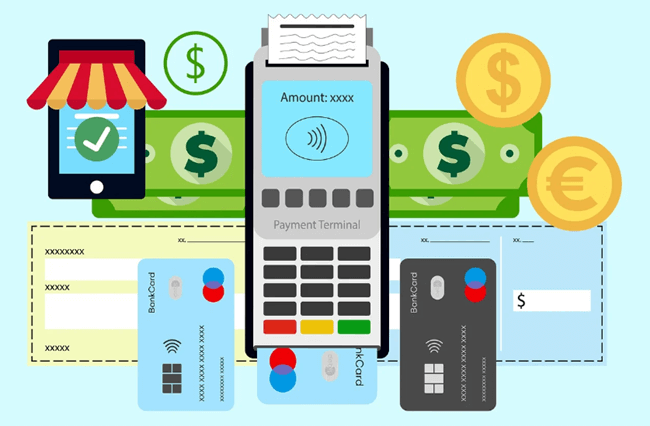
The technology behind these instruments evolved in fascinating ways:
- Holography and specialized printing techniques were introduced to combat counterfeit operations
- Magnetic stripe technology (standardized through ISO/IEC 7811) enabled machine-readable data storage
- Microprocessor chips (guided by EMV standards) brought unprecedented security to transaction processing
- Radio-frequency identification and inductive coupling technologies enabled contactless payments
Each technological leap was meaningfully driven by the dual needs of enhanced security and improved user convenience. The International Organization for Standardization played a crucial role in this evolution, developing critical standards like ISO/IEC 7810 for physical dimensions, ISO/IEC 7812 for numbering systems, and ISO 8583 for messaging protocols that allowed different systems to communicate flawlessly.
Financial Institutions and the Card Ecosystem
Banks occupy a central position in the payment card universe, serving as both issuing banks (providing cards to consumers) and acquiring institutions (processing merchant transactions). Traditional players like Bank of France, Coutts, and Lloyds Bank developed sophisticated card programs alongside non-bank financial institutions that entered the space with innovative approaches. The relationship between these entities and payment card technology created an absolutely transformative financial services landscape.
Credit unions and community banks leveraged payment card programs to compete effectively with larger institutions, offering members access to the same payment systems as multinational corporations. This democratization of financial technology has been particularly significant in regions like Central Asia and Nordic countries, where traditional banking infrastructure was less developed.
The risk management aspect reveals another fascinating dimension. Credit bureaus like those behind FICO scores developed sophisticated credit score models specifically tailored to card usage patterns. These models assess credit history, payment behavior, and debt levels to determine credit limits and interest rates—creating a data-driven approach to credit risk that has revolutionized consumer lending globally.
| Institution Type | Role in Payment Card Ecosystem | Key Contribution |
|---|---|---|
| Commercial Banks | Issue cards, manage customer relationships, extend credit | Created mass-market adoption through branch networks |
| Payment Networks | Operate transaction routing and settlement systems | Developed global interoperability standards |
| Specialty Providers | Offer niche products (fuel cards, premium cards) | Drove innovation in specialized market segments |
| Technology Companies | Develop hardware, software, and security solutions | Enabled digital transformation and enhanced security |
The spectacular growth of non-bank financial institutions in the card space—companies like Stripe, Inc. that process digital payments without being traditional banks—demonstrates how the payment card model has evolved beyond its original banking origins. These entities leveraged application programming interfaces and cloud infrastructure to create phenomenal new payment experiences that traditional institutions struggled to match.
Security: The Eternal Challenge
Payment card fraud represents a constant threat that has driven billions in security investments and technological innovation. The evolution from simple signature verification to sophisticated multifactor authentication illustrates an extraordinary arms race between security professionals and criminal enterprises.
The Card Fraud Prevention Task Force and similar organizations worldwide have developed increasingly sophisticated countermeasures:
- Card security codes (CVV/CVC) provide remarkable protection against unauthorized card-not-present transactions
- EMV chip technology makes cards incredibly difficult to duplicate or tamper with
- Transaction monitoring systems use artificial intelligence to detect anomalous patterns in real-time
- Tokenization replaces actual card numbers with temporary tokens for online transactions
Authentication methods have evolved spectacularly from simple signature comparison to biometric verification using fingerprints or facial recognition. The personal identification number (PIN) system, while seemingly basic, represented a quantum leap in security when introduced, significantly reducing fraud losses at ATMs and point-of-sale terminals.
Security Breakthrough: The implementation of EMV chip technology across Europe and later globally reduced counterfeit card fraud by over 75%—an absolutely extraordinary achievement in financial security that has saved consumers and businesses billions!
The standardization efforts led by the International Organization for Standardization have been particularly important in security. Standards like ISO/IEC 14443 for proximity cards and ISO/IEC 15693 for vicinity cards ensure that contactless payment systems work securely across different manufacturers and regions. This interoperability has been crucial for creating seamless travel experiences where a single card works on public transport systems in London, New York City, and Singapore with equal reliability.
Technological Evolution and Digital Transformation
The physical plastic card has undergone a remarkable metamorphosis, incorporating increasingly sophisticated technologies while maintaining backward compatibility with legacy systems. This balancing act between innovation and compatibility represents one of the most impressive engineering challenges in financial technology.
Computer data storage capabilities within cards expanded dramatically, from the few bytes on magnetic stripes to the kilobytes available in modern chip cards. This storage capacity enabled spectacular new features:
- Multiple applications on a single card (transit, payment, identification)
- Dynamic card security code generation for enhanced online security
- Expiration date management and automatic renewal processes
- Loyalty program integration and gift card functionality
The shift toward digital cards and mobile wallet implementations represents the latest evolutionary leap. Companies like Apple and Google have created digital versions of payment cards that exist only in smartphone memory, protected by the same authentication methods used to unlock devices. This transition from physical to digital has profound implications for retail, fuel purchasing, and virtually every other transaction context.
Contactless smart cards utilizing radio frequency technology through resonant inductive coupling have achieved remarkable market penetration, particularly in Europe and Asia. The ISM radio band provides the frequency spectrum for these transactions, while standards like ISO/IEC 14443 ensure interoperability across different implementations. The COVID-19 pandemic accelerated adoption of contactless payments as consumers and merchants sought hygienic transaction methods—a fascinating example of external events driving technological adoption.
Global Variations and Regional Implementations
While payment cards represent a global phenomenon, regional implementations reveal fascinating adaptations to local conditions, regulations, and consumer preferences. The Single Euro Payments Area initiative in Europe created a harmonized payment system across 36 countries—an absolutely extraordinary achievement in financial integration that has simplified cross-border transactions dramatically.
In contrast, United States payment card usage developed with distinct characteristics:
- Signature verification remained standard longer than in other markets
- Credit cards maintained greater prominence relative to debit cards
- Rewards programs became particularly elaborate and competitive
- Credit score systems evolved specific methodologies for card usage assessment
Asia presents another remarkable variation, with countries like Singapore achieving near-universal card penetration while others in Central Asia continue to demonstrate strong preferences for cash transactions. DBS Bank in Singapore and Bank Central Asia in Indonesia have developed particularly innovative card programs that integrate with national payment systems like NETS and PRIMA.
Regional Innovation: In Nordic countries, payment card adoption rates exceed 90% of the adult population—one of the highest penetration rates globally—with contactless transactions representing the overwhelming majority of card payments. This remarkable adoption curve demonstrates how cultural factors and infrastructure investments can accelerate technological transformation!
The economic indicator value of payment card transaction data has become increasingly significant. Central banks and statistical agencies now use anonymized card transaction data to gauge consumer spending patterns, track economic recovery, and identify sectoral trends with incredible precision that traditional survey methods cannot match.
The Business and Economic Dimensions
Corporations of all sizes have integrated payment card acceptance into their fundamental operations, with implications for revenue collection, customer experience, and cost management. The point of sale terminal—whether physical or virtual—has become the critical interface between businesses and the payment ecosystem.
Fee structures within the payment card industry reveal a complex web of economic relationships:
- Interchange fees paid by merchants to card issuers
- Network fees charged by payment systems like Visa Inc. and Mastercard
- Processing fees levied by companies like Stripe, Inc. and Western Union
- Foreign transaction fees applied to cross-border payments
This fee ecosystem has generated significant controversy and regulatory scrutiny, particularly in Europe where interchange fees have been capped by legislation. The Payments Council in the UK and similar bodies elsewhere have worked to balance the interests of merchants, consumers, and financial institutions in this complex economic landscape.
Brand differentiation in the payment card space has become increasingly sophisticated, with premium products like the Centurion Card from American Express offering extraordinary benefits beyond basic payment functionality. These luxury cards provide access to airport lounges, concierge services, and exclusive events—transforming payment instruments into lifestyle accessories and status symbols.
Emerging Frontiers and Future Directions
The payment card continues to evolve in absolutely extraordinary ways, integrating with emerging technologies and adapting to changing consumer behaviors. Digital currency integration represents perhaps the most fascinating frontier, with experiments connecting traditional card networks to blockchain-based assets and central bank digital currencies.
Biometric authentication is advancing spectacularly, with fingerprint sensors, facial recognition, and even vein pattern recognition being integrated into card designs. These technologies promise to make transactions simultaneously more secure and more convenient—a remarkable combination that has historically been difficult to achieve.
The environmental impact of plastic cards has drawn increasing attention, with manufacturers developing biodegradable materials and digital card alternatives that eliminate physical waste entirely. This sustainability focus represents an important evolution in how the industry addresses its environmental footprint while maintaining the reliability and security that consumers expect.
Machine learning and artificial intelligence applications in fraud detection continue to advance with impressive sophistication, analyzing thousands of data points per transaction to identify patterns indicative of credit card fraud or other malicious activity. These systems represent the cutting edge of financial security, protecting consumers and businesses from increasingly sophisticated criminal enterprises.
| Technology Trend | Impact on Payment Cards | Potential Transformation |
|---|---|---|
| Biometric Integration | Embedded fingerprint sensors, facial recognition | Eliminates need for PINs or signatures |
| Blockchain Connectivity | Links to cryptocurrency wallets and CBDCs | Creates bridge between traditional and digital finance |
| IoT Payments | Enables machine-to-machine transactions | Allows vehicles, appliances to make autonomous payments |
| Sustainability Focus | Biodegradable materials, digital-only options | Reduces environmental impact of payment infrastructure |
The regulatory landscape continues to evolve with equally important implications. The European Union‘s Payment Services Directive (PSD2) has opened payment systems to third-party providers through open banking APIs—a regulatory innovation that has sparked an explosion of fintech innovation across the continent and beyond.
The Unseen Network Beneath Every Transaction
What makes the payment card system truly extraordinary is the invisible infrastructure that supports even the simplest purchase. When a consumer uses their card to buy gasoline at a filling station, they activate an astonishing chain of events:
- The payment terminal captures card data and transaction amount
- This information travels through secure networks to the acquiring bank
- The transaction request routes through the appropriate payment system (Visa Inc., Mastercard, UnionPay, etc.)
- Authorization requests reach the issuing bank, which checks available credit or funds
- Fraud detection systems analyze the transaction against the customer’s credit history and spending patterns
- If approved, an authorization code travels back through the network to the merchant
- Settlement occurs later through electronic funds transfer between financial institutions
This entire process—which involves dozens of separate systems, multiple financial institutions, and several interbank networks—typically completes in under three seconds. The reliability and speed of this system represents one of the most underappreciated engineering achievements of the modern era.
Computer memory technologies play a crucial role throughout this ecosystem. Non-volatile memory in chip cards stores critical information securely, while volatile memory in processing systems handles transient transaction data. The entire infrastructure depends on computer systems of staggering complexity that process billions of transactions daily with near-perfect reliability.
Cultural and Social Implications
Beyond the technical and economic dimensions, payment cards have created fascinating social transformations. The concept of credit has been democratized, with credit scores replacing more subjective assessments of trustworthiness. This data-driven approach has both expanded access to financial services and created new forms of financial exclusion for those outside traditional banking systems.
The psychological relationship between consumers and spending has evolved significantly with card usage. Studies reveal that credit card spending often feels less “real” than cash transactions, potentially influencing purchasing decisions and budget management in remarkable ways. This psychological dimension has implications for everything from household debt levels to retail marketing strategies.
Gift cards have created an entirely new gifting economy, with Christmas and other holidays now featuring significant gift card exchanges. These instruments represent a fascinating hybrid between payment cards and specialized vouchers, creating flexibility for recipients while guaranteeing revenue for retailers.
The information and data generated by card transactions has created entirely new business models. Risk assessment, marketing personalization, and economic forecasting now leverage transaction data with impressive sophistication, creating value far beyond the simple facilitation of payments.
Conclusion: The Central Nervous System of Modern Commerce
The payment card has evolved from a simple convenience into the central nervous system of global commerce—an absolutely extraordinary transformation that continues to accelerate. What began as paper charge plates in department stores has become a digital-first ecosystem connecting consumers, merchants, financial institutions, and technology providers across every continent.
This system’s resilience is perhaps its most remarkable characteristic. Through economic indicator fluctuations, technological revolutions, and global crises, the payment card infrastructure has maintained spectacular reliability while continuously evolving. The transition from magnetic stripes to EMV chips to contactless payments to digital wallets demonstrates an impressive capacity for adaptation that few other technologies can match.
As we look toward the future, the fundamental architecture established by payment card systems will likely form the foundation for whatever comes next in financial technology. Whether through integration with digital currencies, expansion into machine-to-machine payments, or entirely new applications we cannot yet imagine, the principles of secure authentication, reliable settlement, and global interoperability pioneered by payment cards will continue to shape how humanity exchanges value.
The next time you tap, insert, or swipe a payment card, consider the absolutely phenomenal network you’re activating—a global system of technology, trust, and transaction that represents one of the most significant innovations in the history of commerce. This system connects the gasoline purchase at a local filling station to international payment systems, the consumer in Canada to the corporation in Singapore, and the present moment to decades of continuous technological evolution. In this interconnected web of value exchange, the payment card remains the spectacularly effective key that unlocks it all.